The 123 Sigma Rule: 1-2-3 Standard Deviations from the Mean
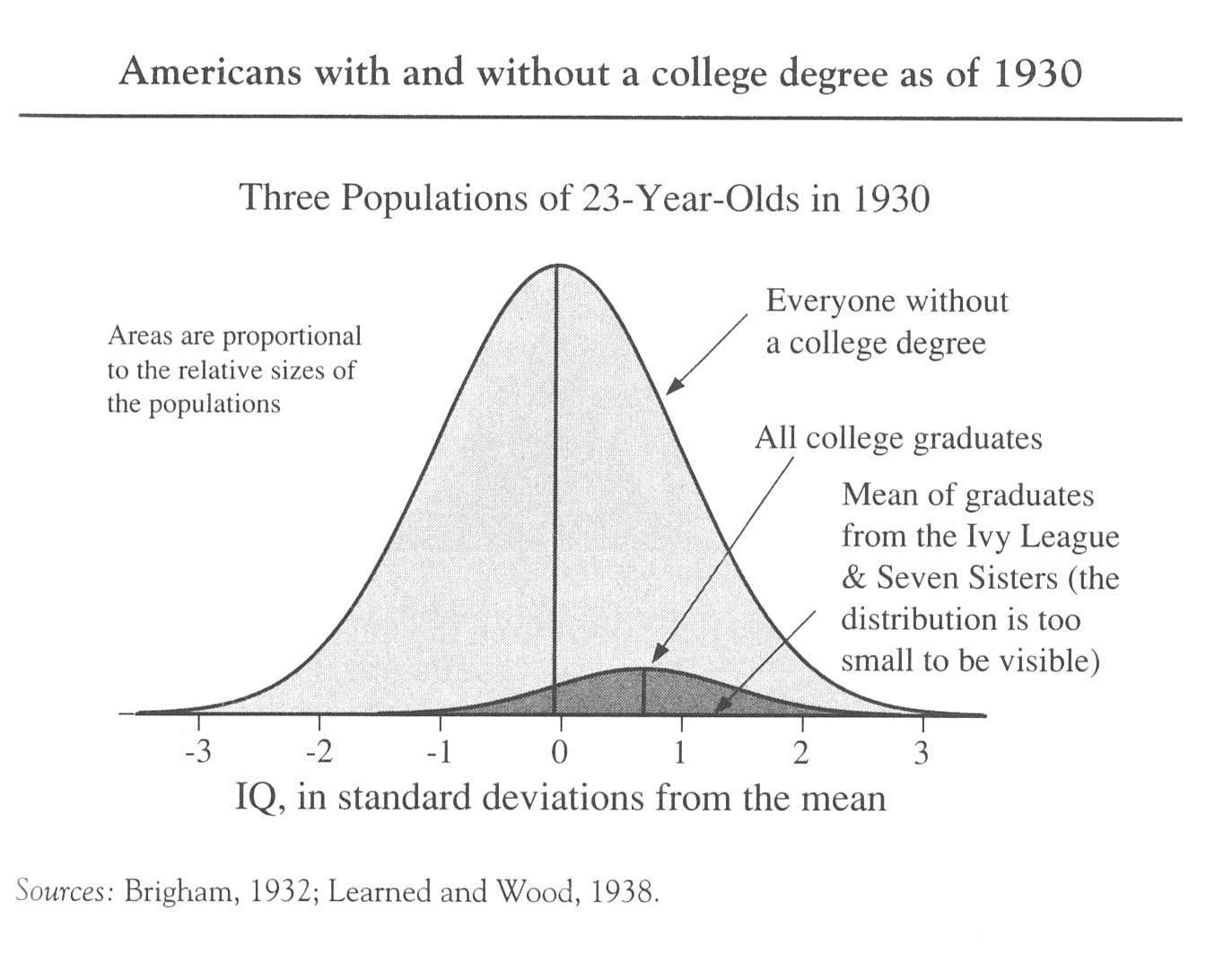
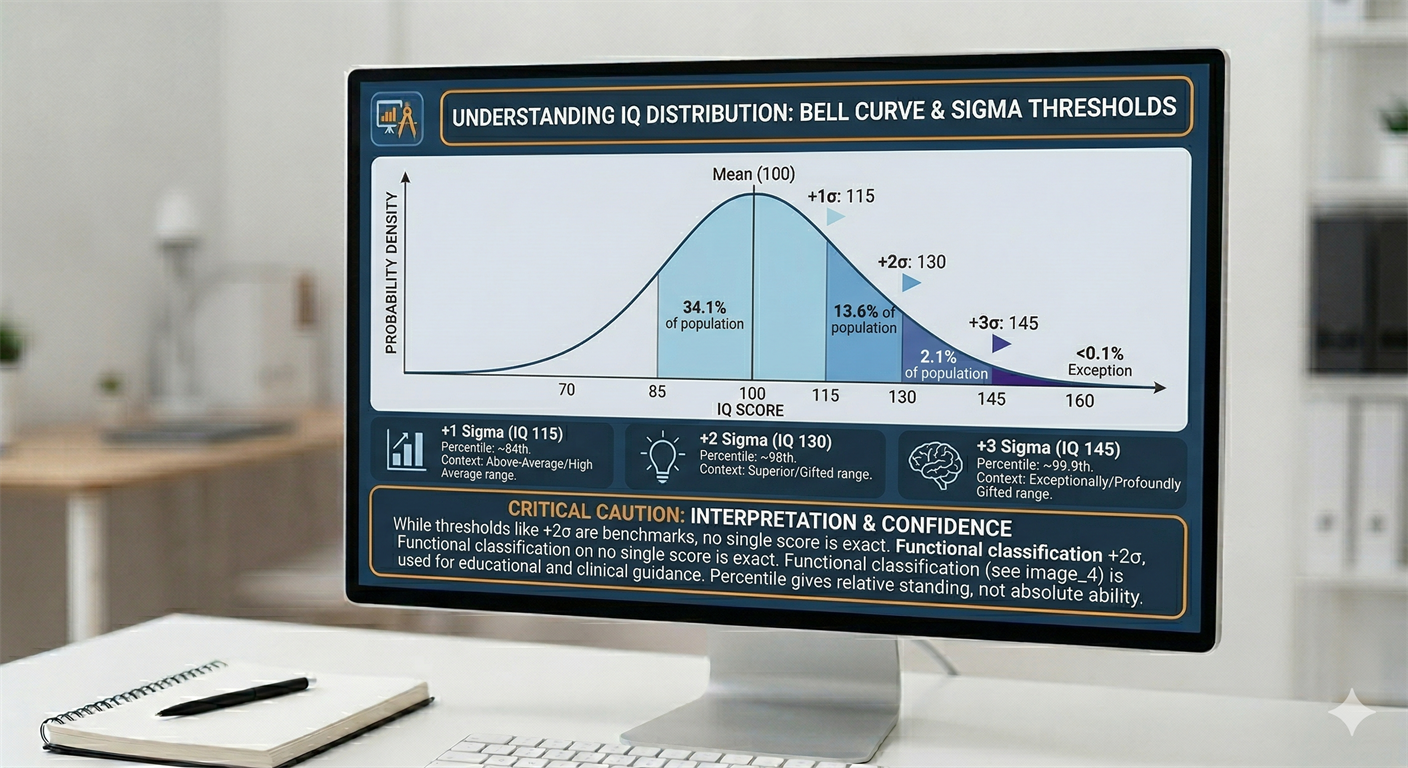
The 123 Sigma Rule (often framed as 1-2-3 sigma framing) is a conceptual framework used to set benchmarks for performance, rarity, or quality in domains like cognitive ability, sport, and productivity. It applies the standard 68-95-99.7 empirical rule: how far a data point sits from the average (mean) in units of standard deviation (sigma).
Key components of the 123 Sigma Rule
1 Sigma (exceptional, top 16%): one standard deviation above the mean, roughly better than 84% of the reference group.
2 Sigma (excellent, top 2-3%): two standard deviations above the mean, often used to mark high-level performance thresholds.
3 Sigma (elite, top 0.1%): three standard deviations above the mean, a rare level in most normally distributed benchmarks.
Application in IQ benchmarks
In IQ framing (mean 100, SD 15), 1 sigma corresponds to about 115, 2 sigma to about 130, and 3 sigma to about 145 or higher. IQ Mindware uses this as a target-setting model, not as a fixed identity label:
- 1 Sigma target: IQ 115 (above average, stronger cognitive-demand readiness)
- 2 Sigma target: IQ 130 (often used as a high-performance benchmark)
- 3 Sigma target: IQ 145+ (rare-range benchmark)
For scale context, see IQ levels explained.
Purpose and common misuse
Purpose: 1-2-3 sigma framing helps set realistic but ambitious targets and calibrate expectations in education, sport, and knowledge work.
Misuse: sigma language becomes misleading when treated as absolute certainty without a clear reference distribution, sample quality check, or confidence context. See interpretation limits.
Context in statistics: the 68-95-99.7 rule
The framework is a direct application of the empirical rule for normal distributions: about 68% of values lie within 1 sigma of the mean, about 95% within 2 sigma, and about 99.7% within 3 sigma. That is why sigma framing is useful for rarity and benchmark logic, while still requiring cautious interpretation in real datasets.
Bottom line
The 123 Sigma Rule is best used as a benchmarking and target-setting framework. It is useful for planning and calibration, but it should not be treated as a deterministic label or a guarantee of real-world execution quality.