Network Neuroscience Theory of Intelligence: How Brain Networks Shape IQ
Network Neuroscience Theory proposes that general intelligence emerges from distributed, interacting brain systems rather than one intelligence centre. This review adds a developmental question: how do learning and plasticity progressively reshape that network, and could some cognitive processes have disproportionate downstream leverage?
In brief
There is no single “intelligence centre” in the human brain.
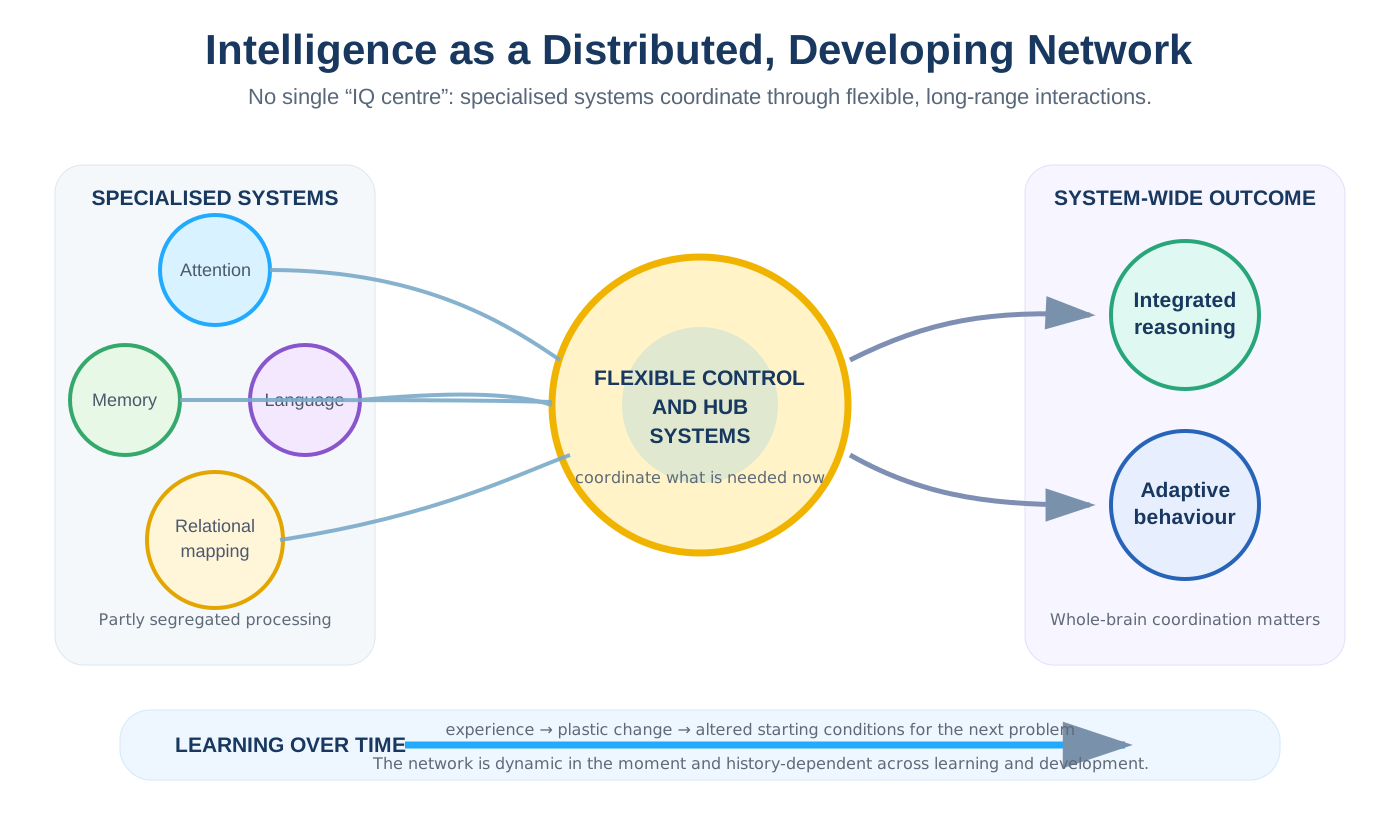
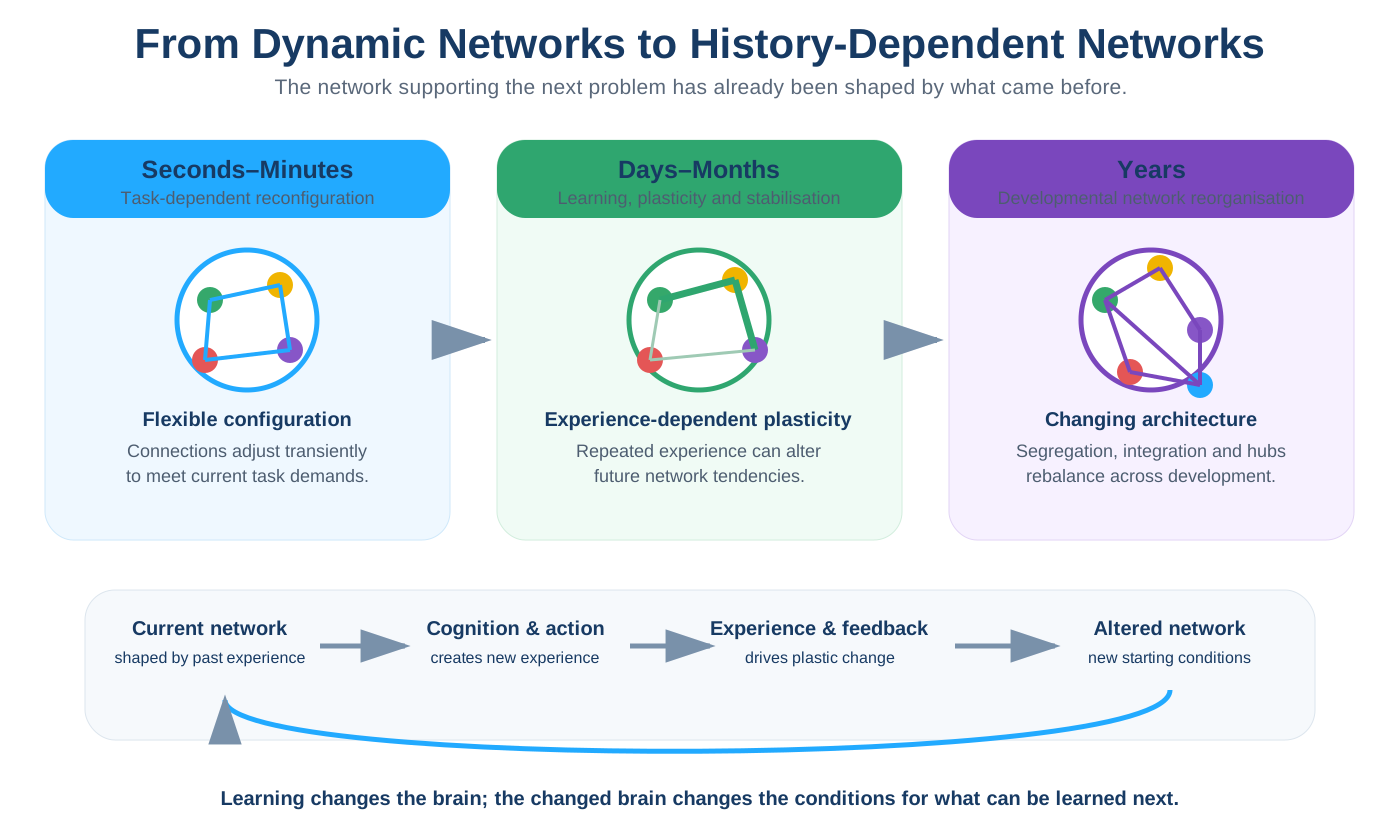
Modern neuroscience increasingly suggests that general intelligence depends not only on how multiple brain systems communicate and reorganise in the moment, but also on how those networks are progressively reshaped through learning and development. Network Neuroscience Theory proposes that intelligent cognition emerges from the global architecture of the brain: specialised networks remain partly segregated, while long-range connections and flexible control systems allow information to be integrated and reconfigured as problems demand it (Barbey, 2018). Importantly, this architecture is not fixed. Network organisation changes over multiple timescales - transiently during cognition, cumulatively through learning and training, and more slowly across development and ageing (Finc et al., 2026). Each learning episode therefore occurs in a system partly shaped by its previous history: intelligence may depend not only on how effectively the brain navigates its current network landscape, but on how learning changes that landscape for the problems that come next.
A major 2026 study of the human connectome provides new support for the distributed-network view. General intelligence could be predicted from whole-brain structural and functional connectivity, with the results implicating distributed brain networks, weak long-range connections, small-world organisation and brain regions capable of helping the system enter otherwise difficult-to-reach states. Importantly, the whole-brain model predicted intelligence better than any network considered by itself (Wilcox et al., 2026).
But distributed does not necessarily mean equal.
Some systems occupy positions that allow them to coordinate, gate or reorganise the processing carried out elsewhere in the brain. This raises an important further question:
Could some cognitive abilities have disproportionate leverage because they change how effectively other abilities can be recruited or learned?
The neuroscience does not yet establish this stronger claim. But it points towards several plausible candidates - particularly flexible cognitive control, attentional and salience regulation, and relational-map construction.
What is Network Neuroscience Theory of intelligence?
Traditional neuroscience theories of intelligence often emphasised particular regions or circuits. The influential Parieto-Frontal Integration Theory, for example, proposed that individual differences in intelligence depend substantially on coordinated processing across frontal and parietal regions.
Network Neuroscience Theory, developed by Aron Barbey, takes the argument further. Rather than asking which region or even which single network “contains” intelligence, it asks how the whole brain is organised to support flexible information processing.
The central idea is that general intelligence, or g, depends partly on the capacity to dynamically reorganise communication among specialised brain systems. Familiar knowledge and routines can often use relatively easy-to-access states. Novel reasoning may require the brain to construct less familiar configurations, integrating information that is normally processed in more separated systems (Barbey, 2018).
An earlier Network Dynamics account by Nikolaidis and Barbey similarly characterised intelligence as emerging from a self-organising system in which cognitive-control networks dynamically configure other systems according to current goals. It emphasised hubs, rich-club organisation, limited processing resources and changing functional-network states rather than treating intelligence as the output of a single static circuit (Nikolaidis & Barbey, 2018).
This leads to a different picture of IQ-related brain function:
↔
local brain networks
↔
cross-network communication
↔
flexible control and reconfiguration
↔
adaptive reasoning and behaviour
Intelligence is therefore increasingly understood as a systems property.
The 2026 evidence: intelligence is distributed across the connectome
Wilcox, Hemmatian, Varshney and Barbey tested Network Neuroscience Theory using data from 831 healthy young adults in the Human Connectome Project (Wilcox et al., 2026).
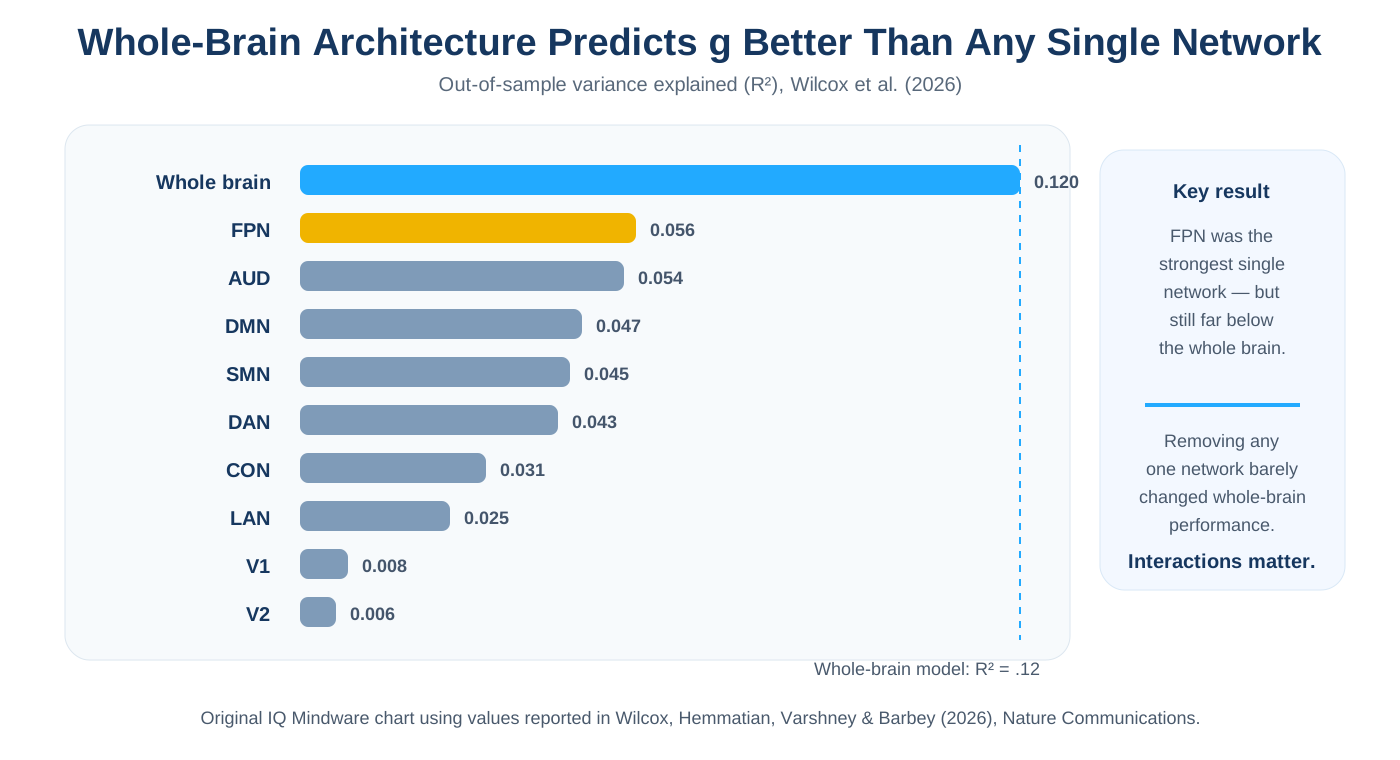
Their whole-brain model combined structural connectivity with functional information and significantly predicted unseen participants' general-intelligence scores. The model explained about 12% of out-of-sample variance in g, with a correlation of approximately r = .35 between predicted and observed scores (Wilcox et al., 2026).
Four results were particularly consistent with Network Neuroscience Theory. Intelligence was associated with multiple networks rather than one isolated system; informative connections included relatively weak, long-range links; regions involved in controlling global network dynamics contributed to intelligence; and the overall architecture displayed the balance of segregation and integration characteristic of small-world networks.
Perhaps the most informative result concerned the individual networks. When each intrinsic connectivity network was used by itself, the frontoparietal network had the strongest independent prediction, explaining approximately 5.6% of variance. But even this was well below the performance of the whole-brain model. Moreover, removing any one network from the complete model had negligible impact. The authors concluded that between-network interactions were doing much of the predictive work.
That is an important result. It means the evidence does not support:
“The frontoparietal network is the intelligence network.”
A better interpretation is:
The frontoparietal system appears unusually relevant to intelligence, but its importance lies partly in how it interacts with the rest of the brain.
Intelligence is distributed - but the brain is not an equal democracy
A network can be distributed without all of its components playing equivalent roles.
Consider a transport network. Most stations matter, but a station connecting several otherwise separated lines has consequences far beyond the passengers originating there. In graph theory, such regions are often described as hubs.
The brain contains similar organisational features. Some regions communicate primarily within a specialised network. Others connect extensively across networks or help the system switch among different configurations.
For intelligence, this distinction may matter because a process can potentially be important in two different ways. It may perform a useful computation itself. Or it may alter the conditions under which many other computations operate.
That second possibility is particularly interesting when thinking about the development of intelligence.
Candidate 1: frontoparietal control as a flexible hub
The strongest current candidate for this kind of broad cognitive leverage is the frontoparietal network, overlapping substantially with what is also called the multiple-demand or cognitive-control system.
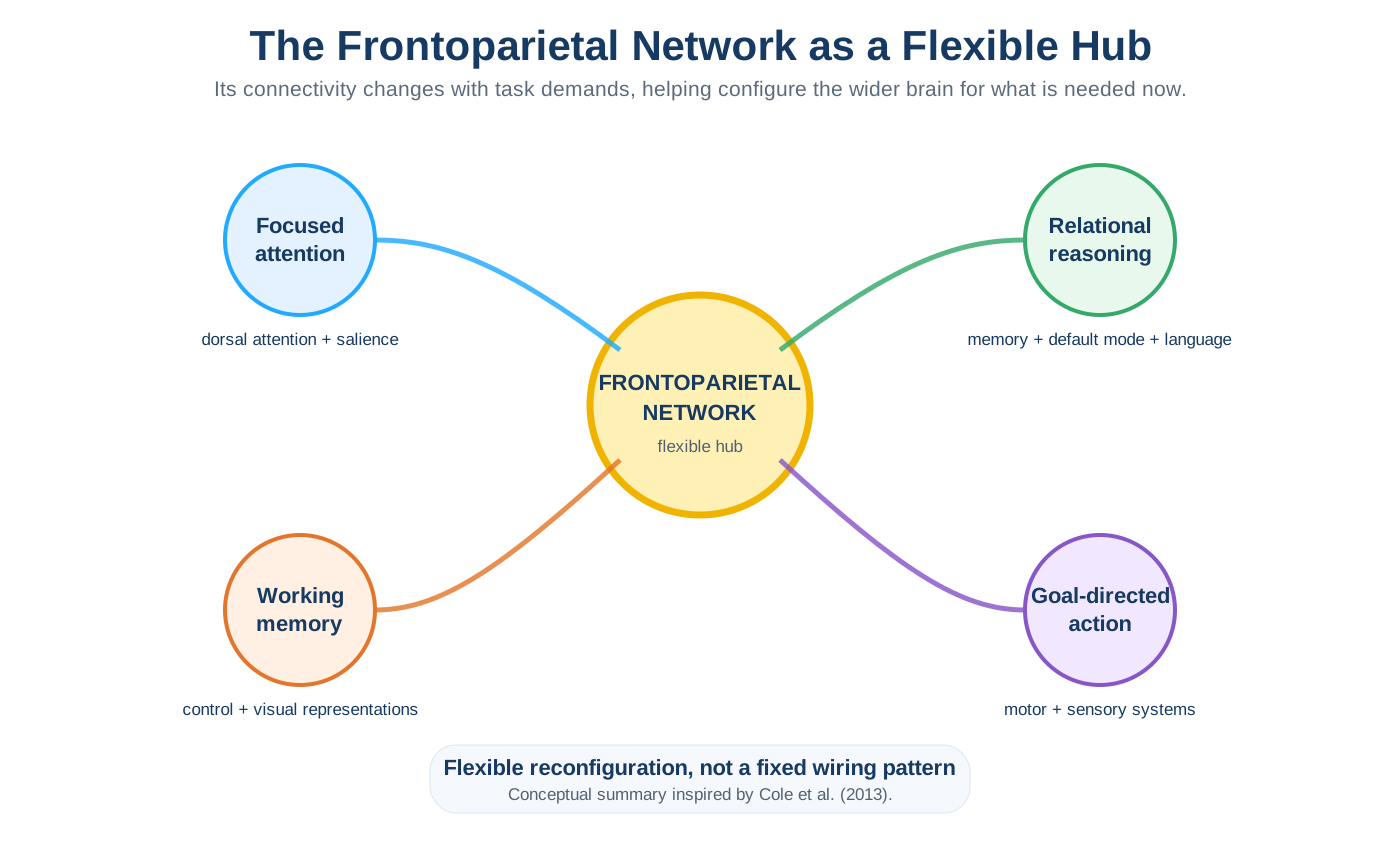
Cole and colleagues found that the functional connectivity of the frontoparietal network changed more than that of other networks across many different task states. Its connections appeared to reorganise according to what participants were currently required to do. These task-dependent connectivity patterns also generalised across practised and novel tasks (Cole et al., 2013).
This led to the description of frontoparietal regions as flexible hubs. Rather than representing one particular kind of information, they appear able to help configure other systems around the requirements of the current task.
Earlier work by Cole and colleagues had also identified a lateral prefrontal region with high global connectivity. Individual differences in this connectivity were selectively related to fluid intelligence, suggesting one possible mechanism by which cognitive control can exert influence across the wider brain (Cole et al., 2012).
In cognitive terms, the relevant construct may therefore be broader than simple working-memory storage. It is closer to:
the ability to construct, maintain and reconfigure an active task model while coordinating the other processes needed to implement it.
This would make cognitive control a plausible candidate for a high-leverage ability: not because it “is” intelligence, but because many other forms of intelligent cognition depend upon being appropriately orchestrated.
Candidate 2: salience and cingulo-opercular systems - what deserves control?
A second candidate plays a somewhat different role.
Work on top-down control has distinguished relatively rapid frontoparietal adjustments from more sustained cingulo-opercular control. Dosenbach and colleagues proposed that the frontoparietal system helps initiate and modify control, while the cingulo-opercular system helps maintain the broader task set over time (Dosenbach et al., 2008).
Closely related work has highlighted the anterior insula as an important hub within the salience network. Menon and Uddin proposed that it helps identify behaviourally important events and initiate changes in the engagement of other large-scale networks (Menon & Uddin, 2010).
There is also direct evidence connecting these hubs with intelligence. Hilger and colleagues found that general intelligence was associated with greater nodal efficiency in salience-network hubs, including regions of the anterior insula and anterior cingulate, even though intelligence was not significantly related to a simple measure of global network efficiency across the entire brain (Hilger et al., 2017).
This suggests another possible form of leverage:
↓
engage the appropriate task set
↓
maintain or change control
↓
regulate which other systems dominate processing
In psychological terms, this connects intelligence to attentional regulation, relevance detection and cognitive-state control.
Again, the inference must remain cautious: showing that such hubs correlate with intelligence does not establish that training the corresponding psychological ability will produce widespread transfer.
Candidate 3: relational cognitive maps
A rather different line of research points towards the way the brain organises knowledge itself.
Memory is often discussed as though intelligence should depend on how much information a person can retain. But emerging research suggests that the crucial property may sometimes be how experiences are organised relationally.
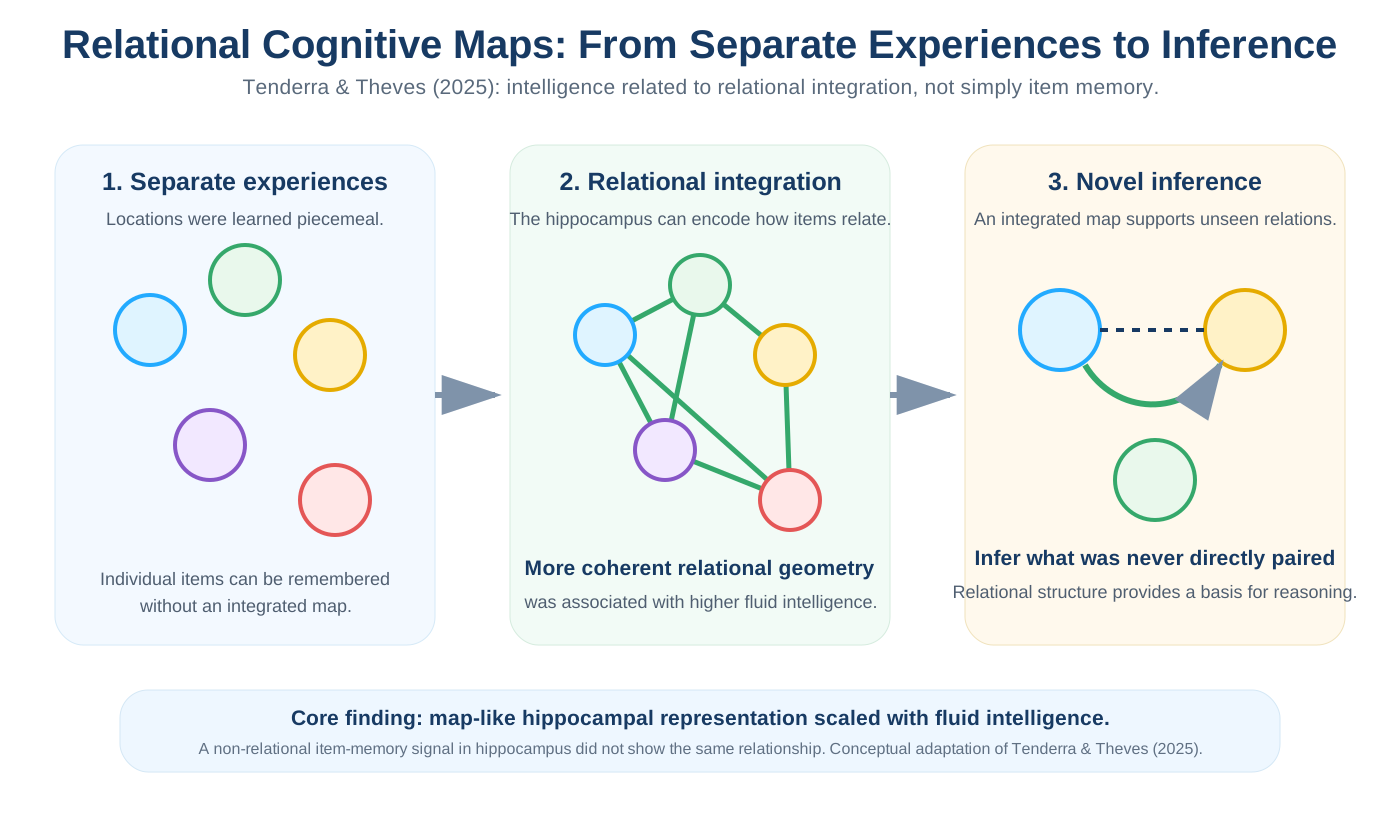
Tenderra and Theves investigated whether hippocampal representations formed map-like structures reflecting relationships among separately learned object locations. Fluid intelligence was positively associated with the quality of these relational, map-like representations. Importantly, intelligence was not similarly associated with ordinary non-relational hippocampal item-memory signals (Tenderra & Theves, 2025).
Intelligent memory may depend less on remembering isolated items and more on organising separate experiences into structures that support inference.
This interpretation has become even more interesting with developmental evidence published in 2026.
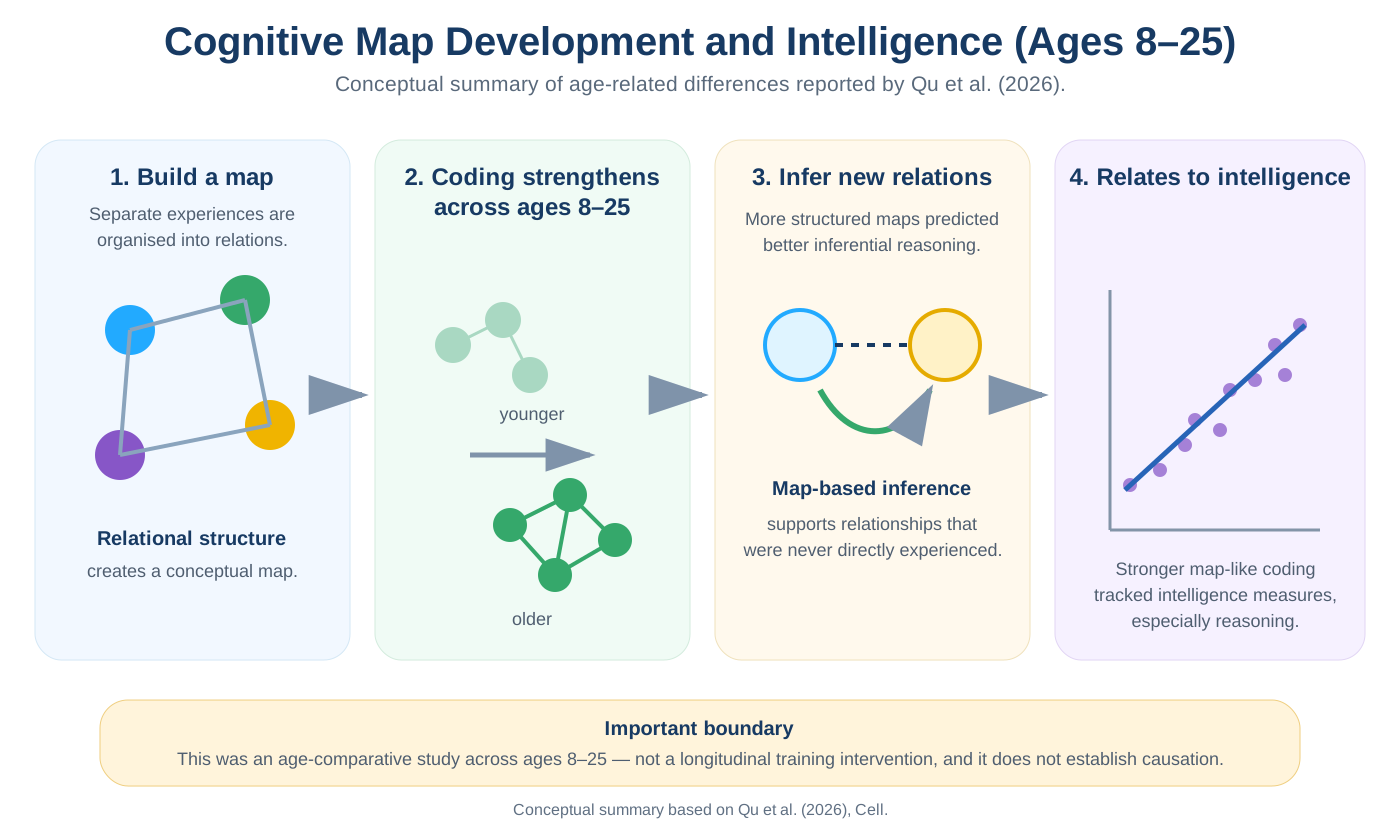
Qu and colleagues studied 203 participants aged 8-25. Across this developmental age range, older participants showed stronger grid-like coding of a non-spatial conceptual map in entorhinal cortex, and stronger coding predicted better inferential reasoning. New information was also assimilated into existing entorhinal map structures, while medial prefrontal representations supported relationships within the developing knowledge structure. Measures of these cognitive-map representations tracked intelligence measures, particularly reasoning ability (Qu et al., 2026).
Because this was an age-comparative rather than a long-term longitudinal training study, it does not by itself show that developing a better cognitive map causes later gains in intelligence. But it provides a particularly suggestive mechanism by which existing representational structure could alter the assimilation of subsequent knowledge.
That provides an intriguing developmental chain:
↓
relational structure
↓
cognitive map
↓
inference across unseen relationships
↓
assimilation of new knowledge
It is not evidence that “hippocampal training raises IQ”. But it strengthens the possibility that relational-map formation is one of the mechanisms through which learning becomes progressively more powerful.
From brain hubs to cognitive leverage
The plasticity literature adds an important temporal dimension to this picture. Brain-network organisation is not merely reconfigured from task to task; repeated experience can progressively alter the neural conditions under which later cognition occurs. Classic learning studies have shown dynamic reconfiguration of network communities during skill acquisition, while recent reviews explicitly describe network organisation as adapting cumulatively over learning and training rather than simply fluctuating around a fixed architecture (Bassett et al., 2011; Finc et al., 2026).
This research suggests an important distinction between being associated with intelligence and having leverage over the development of intelligence.
Suppose ability A correlates strongly with IQ. That tells us that people who perform well on A also tend to perform well on intelligence measures:
But that does not show that improving A causes any other capacity to improve.
A stronger possibility is that ability A changes the subsequent learning of ability B:
That would make A a developmental multiplier.
For example, better attentional control might allow more diagnostic information to be selected during relational learning. Better relational integration might then produce richer predictive maps. Richer maps might provide better representations over which explicit reasoning can operate.
The resulting hypothesis looks something like:
select and stabilise useful information
↓
RELATIONAL INTEGRATION
discover how variables fit together
↓
PREDICTIVE MAPPING
represent transitions and reachable futures
↓
REASONING
infer relationships not directly observed
↓
REAL-WORLD LEARNING
creates further structured experience ↺
This is not yet an established neuroscience pathway. It is a testable developmental hypothesis suggested by the convergence of several lines of evidence.
Why “hub” should not simply mean “highest correlation with IQ”
This distinction matters for cognitive training.
Imagine two abilities. Ability X correlates very strongly with an IQ test but has little influence on the subsequent acquisition of other skills. Ability Y shows only a moderate direct relationship with IQ, but determines which information is selected, how effectively relationships are learned, or how easily other cognitive systems can be reconfigured.
Ability Y could have greater developmental leverage, despite the weaker cross-sectional correlation.
In network language, the important quantity might therefore not be only how strongly a node relates to the system's current output. It might also be something analogous to its outgoing influence on future learning trajectories.
A cognitive hub would be a process whose development disproportionately changes what other parts of the cognitive system can subsequently learn or do.
That remains a hypothesis. But it is one that can be tested.
Difficult-to-reach brain states and intelligence
Another important idea within Network Neuroscience Theory concerns network controllability.
Some network configurations are easy for the brain to enter because they rely on strongly established pathways. Others are less readily accessible and require a larger-scale reorganisation of activity.
In the 2026 Wilcox study, intelligence was related to modal control - a network-control concept referring to the ability of particular nodes to help drive the system towards difficult-to-reach states. The authors interpret this as one mechanism supporting the flexible orchestration of global brain activity (Wilcox et al., 2026).
This is theoretically appealing because unfamiliar problems often demand precisely this kind of cognitive transition. The answer cannot simply be retrieved from a familiar routine; the system must enter a different configuration.
However, network controllability remains methodologically active. A very recent Human Connectome Project analysis found substantial shared variance among common controllability metrics and cautioned against mapping distinct metrics too neatly onto fluid versus crystallised intelligence (Ng et al., 2026).
So controllability is promising, but it should not yet be treated as a direct neural measurement of “cognitive flexibility” or IQ.
What this research does not show
The evidence reviewed here supports a network account of intelligence more strongly than a simple localisation account. It also identifies systems that appear especially well placed to coordinate processing, regulate control or construct relational representations.
It does not, however, demonstrate that training these systems will necessarily increase general intelligence.
In particular, current findings do not establish that frontoparietal training raises IQ, that attention training automatically improves reasoning, that a highly connected neural hub must correspond to the best cognitive-training target, or that improving relational memory will necessarily generate far transfer.
This is an important distinction because association, network centrality, developmental plasticity and causal trainability are different questions.
The Wilcox study itself makes the point indirectly: although the frontoparietal network was the strongest individual-network predictor, the whole brain was markedly better, and removing individual networks barely harmed prediction. Intelligence was expressed primarily through a distributed interacting architecture.
The next question: can intelligence compound?
This brings network neuroscience into contact with a different class of theory: developmental or mutualistic theories of intelligence.
Mutualism proposes that cognitive capacities can support one another during development. Better vocabulary may help knowledge acquisition; better reasoning may aid learning; improved attention may make subsequent learning more effective.
The network-neuroscience findings reviewed here suggest a more specific possibility:
These interactions may be asymmetric. Some capacities may have more outgoing developmental influence than others.
A control process that coordinates many other processes, or a relational system that determines how new experiences are organised, could theoretically have greater downstream consequences than a more specialised skill.
This leads to an asymmetric mutualism hypothesis:
so that an initially modest improvement changes the future trajectory of learning.
The key empirical question is therefore not merely:
“Does training attention improve reasoning on a post-test?”
It is:
“Does prior improvement in attention alter how efficiently relational reasoning can subsequently be learned?”
And then:
“Does improved relational integration alter the rate or depth at which predictive maps and explicit reasoning can subsequently develop?”
Those are stronger - and considerably more informative - tests of cognitive interaction.
What this could mean for cognitive training
Most cognitive-training studies use a relatively simple design:
If B does not improve directly, transfer is judged absent.
A developmental network model suggests another possibility. Training A might instead modify the conditions under which B is learned later:
The important outcome then becomes the subsequent learning rate of B - dB/dt - rather than only the immediate post-training level of B.
This would allow researchers to test whether particular cognitive capacities really function as learning multipliers.
For IQ Mindware, this is the scientific rationale behind taking interactions among cognitive capacities seriously rather than simply assembling a collection of tasks associated with IQ.
It is not evidence that such compounding has already been demonstrated. It is a research programme.
Frequently asked questions
Is there one brain network responsible for IQ?
No. Current evidence suggests that general intelligence depends on distributed communication across many brain networks. The frontoparietal network is particularly strongly implicated, but whole-brain connectivity predicts intelligence better than any single network considered alone.
What brain network is most closely associated with intelligence?
Frontal and parietal control systems are among the most consistently implicated networks. In the 2026 Wilcox study, the frontoparietal network was the strongest individual-network predictor of g, although its predictive performance was substantially lower than that of the complete connectome.
Does brain connectivity predict IQ?
Yes, to a degree. Several studies have found relationships between functional or structural connectivity and individual differences in intelligence. The size and replicability of particular network effects vary, however, and connectivity is not a replacement for psychometric intelligence testing.
Are brain hubs more important for intelligence?
Some hub-like systems appear particularly relevant. Frontoparietal flexible hubs, salience-network hubs and regions involved in network controllability have all been associated with intelligence. But “hub” does not mean that a region independently produces intelligence; its importance may derive from its interactions with other systems.
Can training these networks increase IQ?
That has not yet been established. Network-neuroscience findings identify plausible mechanisms and intervention targets, but evidence that cognitive training produces broad, durable increases in general intelligence remains much weaker than evidence for improvements on trained and closely related tasks.
Conclusion
Network Neuroscience Theory changes the question we ask about the brain and intelligence.
Instead of:
Where is intelligence located?
the better question may be:
What kind of network organisation allows specialised cognitive systems to work together flexibly - and how does learning progressively reshape that organisation?
The emerging answer points towards a distributed architecture characterised by specialised modules, long-range communication, flexible control, relational representations and the capacity to reorganise as problems change.
But this raises a second question that neuroscience is only beginning to address:
Are some parts of the cognitive system disproportionately important because they improve the conditions under which other capacities develop?
If so, intelligence may not merely be a network of abilities. It may be a self-developing, history-dependent network in which some capacities act as multipliers for others.
Establishing that will require moving beyond correlations and conventional pre/post transfer studies towards longitudinal experiments that measure how developing one ability changes the subsequent learning dynamics of another.
That is where the network neuroscience of intelligence and developmental theories of cognitive mutualism may prove especially powerful together.
References
Barbey, A. K. (2018). Network neuroscience theory of human intelligence. Trends in Cognitive Sciences, 22(1), 8-20. https://doi.org/10.1016/j.tics.2017.10.001
Bassett, D. S., Wymbs, N. F., Porter, M. A., Mucha, P. J., Carlson, J. M., & Grafton, S. T. (2011). Dynamic reconfiguration of human brain networks during learning. Proceedings of the National Academy of Sciences, 108(18), 7641-7646. https://doi.org/10.1073/pnas.1018985108
Cole, M. W., Yarkoni, T., Repovs, G., Anticevic, A., & Braver, T. S. (2012). Global connectivity of prefrontal cortex predicts cognitive control and intelligence. Journal of Neuroscience, 32(26), 8988-8999. https://doi.org/10.1523/JNEUROSCI.0536-12.2012
Cole, M. W., Reynolds, J. R., Power, J. D., Repovs, G., Anticevic, A., & Braver, T. S. (2013). Multi-task connectivity reveals flexible hubs for adaptive task control. Nature Neuroscience, 16, 1348-1355. https://doi.org/10.1038/nn.3470
Dosenbach, N. U. F., Fair, D. A., Cohen, A. L., Schlaggar, B. L., & Petersen, S. E. (2008). A dual-networks architecture of top-down control. Trends in Cognitive Sciences, 12(3), 99-105. https://doi.org/10.1016/j.tics.2008.01.001
Finc, K., Adamska-Stolarczyk, I., & Bassett, D. S. (2026). Flexible modularity in the human brain: How network architecture reconfigures over time. Neuroscience & Biobehavioral Reviews, 188, 106784. https://doi.org/10.1016/j.neubiorev.2026.106784
Hilger, K., Ekman, M., Fiebach, C. J., & Basten, U. (2017). Efficient hubs in the intelligent brain: Nodal efficiency of hub regions in the salience network is associated with general intelligence. Intelligence, 60, 10-25. https://doi.org/10.1016/j.intell.2016.11.001
Menon, V., & Uddin, L. Q. (2010). Saliency, switching, attention and control: A network model of insula function. Brain Structure and Function, 214, 655-667. https://doi.org/10.1007/s00429-010-0262-0
Miller, J. A., & Constantinidis, C. (2024). Timescales of learning in prefrontal cortex. Nature Reviews Neuroscience, 25, 597-610. https://doi.org/10.1038/s41583-024-00836-8
Ng, J., Feusner, J. D., & Hawco, C. (2026). Structural and dynamic functional controllability: Shared variance between network control metrics limits attribution to distinct domains of intelligence. Frontiers in Human Neuroscience, 20, 1920417. https://doi.org/10.3389/fnhum.2026.1920417
Nikolaidis, A., & Barbey, A. K. (2018). Network dynamics theory of human intelligence. In R. E. Jung & O. Vartanian (Eds.), The Cambridge Handbook of the Neuroscience of Creativity (pp. 382-404). Cambridge University Press. https://doi.org/10.1017/9781316556238.022
Qu, Y., Ou, J., Pang, L., Wu, S., Luo, Y., Behrens, T. E. J., & Liu, Y. (2026). Development of non-spatial grid-like neural codes tracks inference and intelligence. Cell, 189(10), 3091-3106.e15. https://doi.org/10.1016/j.cell.2026.02.028
Tenderra, R. M., & Theves, S. (2025). Human intelligence relates to neural measures of cognitive map formation. Cell Reports, 44, 116033. https://doi.org/10.1016/j.celrep.2025.116033
Wilcox, R. R., Hemmatian, B., Varshney, L. R., & Barbey, A. K. (2026). The network architecture of general intelligence in the human connectome. Nature Communications, 17, 2027. https://doi.org/10.1038/s41467-026-68698-5